


INTERESTING OBSERVATIONS AT SHABLA TUZLA
15.01.2013
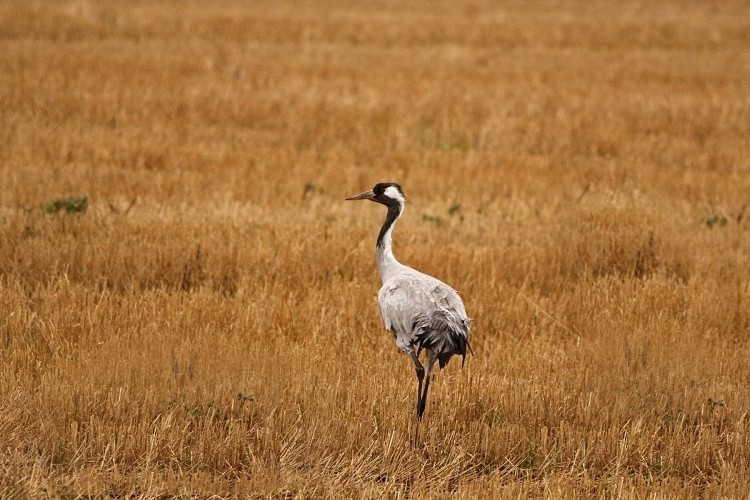
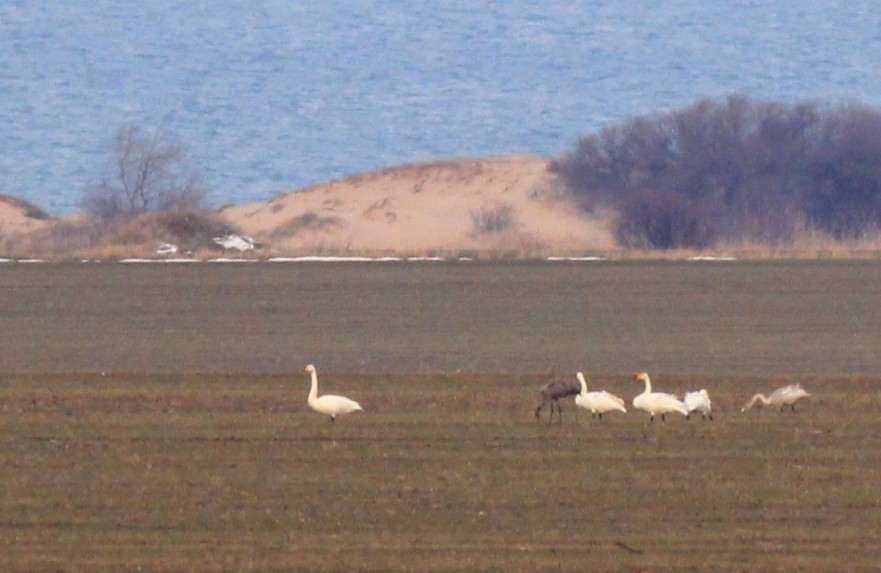
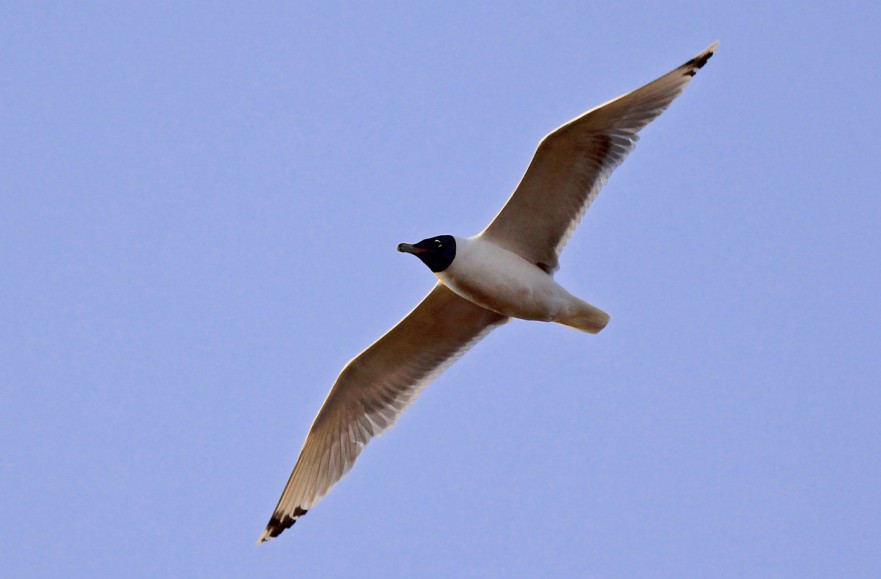 On 10 January 2013, a team of BSPB found two interesting species in the region of Shabla Tuzla – a Common Crane (Grus grus) and Pallas’s Gull (Larus ichtyaetus). The young crane had found refuge in the lagoon and in the fields around it, keeping tightly to a flock of Whooper Swans (Cygnus cygnus), in whose company it seemed safe - however, fifty pairs of eyes watch much better for enemies than just one! As we know, a few decades ago common cranes were more frequent and more numerous in Bulgaria, mainly during migration, but some flocks used to stay in the winter months too. Subsequently, the species declined sharply in the country and its appearance is a joyful event for bird lovers. In fact, the common cranes nested in Bulgaria until the mid-twentieth century, when their last breeding site was destroyed - Dragoman marsh was drained and transformed into a dam. A fact that needs to be reminded to some new "builders" of modern Bulgaria ...
The other interesting observation was an adult Pallas’s Gull (Larus ichtyaetus) in full breeding plumage. This species was established relatively recently in our country and this is about its 20th observation in Bulgaria. It is a new acquaintance. It is typical for the north-eastern areas of the Black Sea and its 'normal' migration route is along the eastern rather than western coast. Unlike the common crane, this bird did not need outside help to increase its safety.
These two observations show how even a small wetland may be essential for rare and interesting representatives of the Bulgarian bird fauna, how it can be attractive for ornithological tourism and a source of income for local people. Just for a moment imagine how would it look today if by magic it was transferred to the UK - surrounded by hundreds of cars parked at organized temporary parking lots, thousands of people with telescopes and binoculars, crowded restaurants and full hotels and guest houses in Shabla ... In fact, today in Shabla hardly anyone even knew we saw some attractive species for which birders in Western Europe pay substantial money to watch...
The monitoring of Natura 2000 sites Shabla Lake Complex and Durankulak Lake is performed by BSPB within the EU funded project LIFE + "Safe Ground for Redbreasts" in partnership with local stakeholders and partner organizations from the UK.
Photos:
|
|


